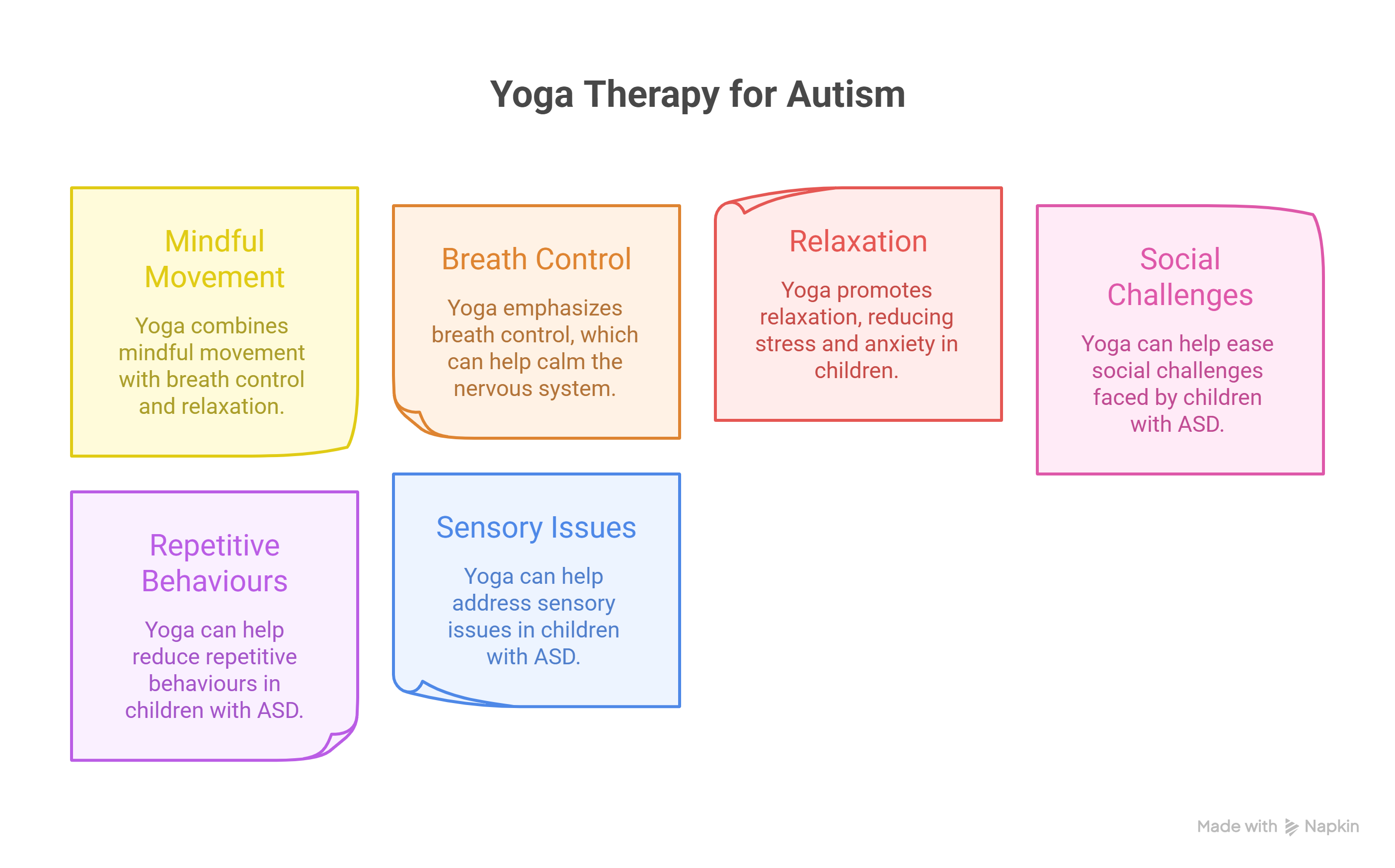
Yoga, an ancient practice blending mindful movement, breath control, and relaxation—including Therapeutic Yoga for Autism Children—is gaining traction as a supportive therapy for children with autism spectrum disorder (ASD). In India, where ASD affects millions, research from Bengaluru-based institutions highlights yoga’s potential to ease core symptoms like social challenges, repetitive behaviours, and sensory issues through Kids Yoga Therapy for Autism and more.
Pioneering Research: Integrated Yoga Therapy (2010)
Conducted by researchers from Swami Vivekananda Yoga Anusandhana Samsthana (S-VYASA) in Bengaluru, this study integrated Yoga Therapy for Special Needs Children with applied behaviour analysis (ABA) for six children aged 8-14 attending a special school. Over two academic years, participants engaged in daily sessions featuring asanas (postures like Tadasana and Vajrasana), Breathing Exercises for Kids with Autism via pranayama, chanting, and loosening techniques, often with parental involvement at home.
Educators and parents rated progress using standardized tools pre-, mid-, and post-intervention. Results were striking: imitation skills surged from 18% to 80%, eye-to-eye contact improved dramatically, sitting tolerance extended for group activities, and self-stimulatory behaviours dropped significantly. Social interactions blossomed, with kids initiating play and showing affection—behaviours rarely seen before. The study attributes gains to yoga’s multisensory input, activating mirror neurons for better imitation and fostering body awareness amid ASD’s proprioceptive deficits. This holistic Therapeutic Yoga for Autism Children approach not only complemented ABA but empowered families, proving yoga’s role in long-term behavioural shifts.
Recent Validation: 12-Week Yoga Program (2022)
Building on earlier work, S-VYASA researchers randomized 43 ASD children (ages 5-15) from four Bengaluru special schools into yoga (n=23) and control (n=20) groups. The yoga cohort practiced 45-minute daily sessions for 12 weeks, including warm-ups, asanas (e.g., Surya Namaskar adaptations), Breathing Exercises for Kids with Autism like Kapalbhati, games, and deep relaxation via Shavasana—all led by certified instructors.
Parents assessed changes via the Autism Treatment Evaluation Checklist (ATEC). The yoga group showed profound reductions in overall autism severity (P<0.001), particularly in speech/language communication (up to 25% drop) and health/physical/behavior domains. Subscales revealed less sensory over-responsivity, improved sleep, digestion, and fear responses. Controls saw minimal change, underscoring Kids Yoga Therapy for Autism‘s edge. Mechanisms cited include parasympathetic activation for stress regulation and rhythmic movements enhancing calmness and self-regulation.
Why Yoga Works for ASD: Science and Broader Evidence
Yoga addresses ASD’s triad—social deficits, communication barriers, and repetitive patterns—through neuroplasticity. Mindful poses build proprioception and bilateral coordination, while Breathing Exercises for Kids with Autism calm hyperactivity via vagus nerve stimulation. Kids Yoga for Concentration and Memory further aids focus, as seen in pose sequences improving recall and attention.
Practical Tips for Parents and Schools
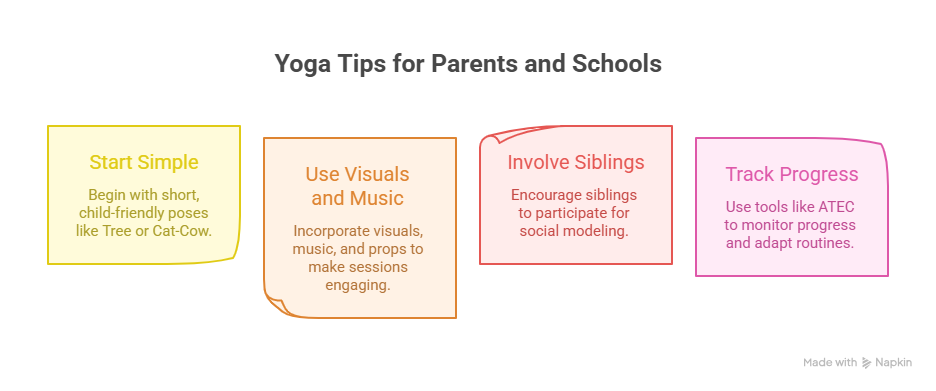
Start simple: 10-15 minutes daily with child-friendly poses like Tree (for balance) or Cat-Cow (for spine awareness) as part of Kids Yoga for Concentration and Memory. Use visuals, music, and props; involve siblings for social modelling during Yoga Therapy for Special Needs Children sessions. Track progress with tools like ATEC, and adapt Therapeutic Yoga for Autism Children routines to individual needs for best results.
A Hopeful Path Forward
These studies, amid rising ASD diagnoses (1 in 36 kids globally), spotlight Kids Yoga Therapy for Autism as an empowering adjunct. With 2025 trials confirming benefits across domains, integrating yoga into IEPs could transform lives.
Empower your child—roll out the mat today!
Note- VHG is in technical collaboration with SVYASA University.